
China to Spain freight: air, sea, rail or DDP?
The best option depends on your cargo and the promise you need to keep. Compare modes and DDP by full landed cost and responsibility.
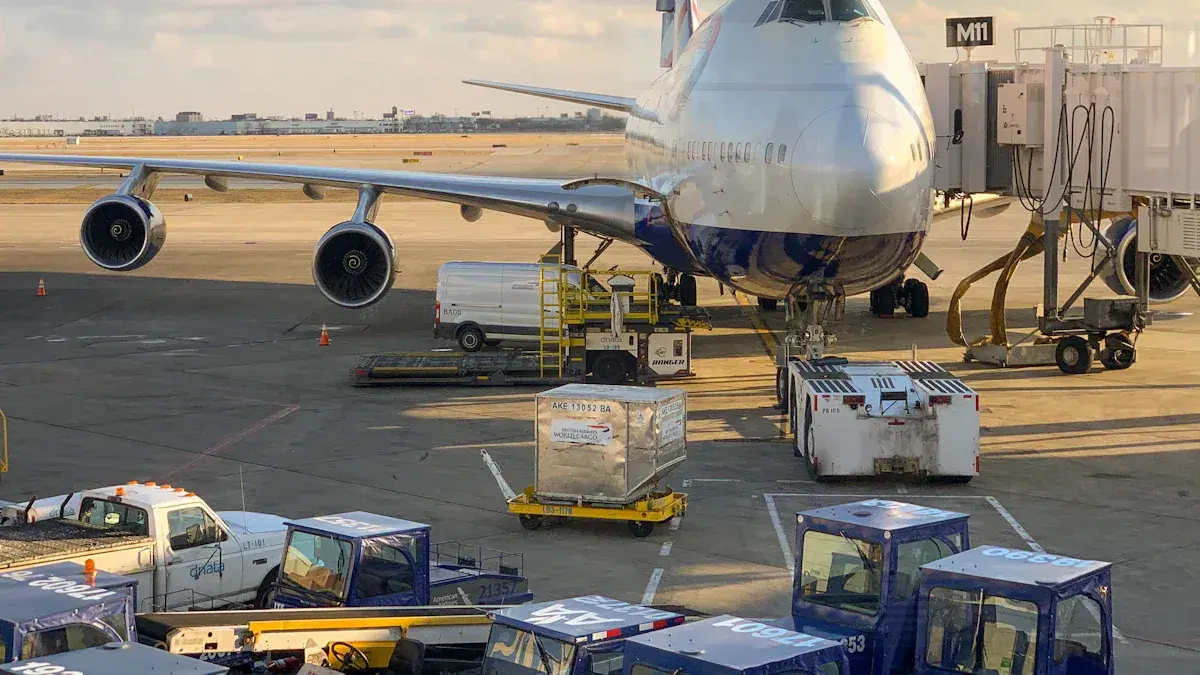
For China-to-Spain shipments, the right choice depends on your cargo and the promise you need to keep. Air can protect a launch date, sea suits planned replenishment, rail can be a middle ground on some lanes, and DDP can simplify coordination when its scope is clear. Compare full landed cost and responsibility, not just the transport quote.
In short
- Match the mode to your stock risk, order value, volume and delivery window.
- DDP can simplify handoffs, but confirm what is included and who owns destination compliance.
- Have a main route and a backup before committing to a seasonal or launch shipment.
Comparing modes for Spain
| Mode | Advantage | Trade-off | Useful when |
|---|---|---|---|
| Air | Shorter transit, quick response to urgent needs | Higher cost, sensitive to chargeable weight | Launch stock, urgent replenishment, higher-value cargo |
| Sea | Efficient for planned volume and heavy cargo | Longer planning horizon, more port handoffs | Stable replenishment, container or consolidated cargo |
| Rail | Can sit between air and sea on suitable lanes | Availability, routing and terminal handoffs vary | Products with a defined schedule that need a middle option |
| DDP | Combines transport, customs, duties and delivery in a clearer scope | Inclusions, importer-of-record and destination duties must be checked | Teams that want fewer fragmented handoffs |
Use this as a starting point, not a promise of transit time: real performance depends on origin, destination, classification, season, carrier, documents and customs processing.
DDP is a responsibility model
DDP is an Incoterms rule that allocates responsibilities, not a fourth physical mode next to air, sea and rail. A DDP quote can use any of them. Under DDP the seller handles export, transit and import clearance and delivers at the named destination ready for unloading. Practical limits can make that unsuitable, so check that the proposed seller can actually perform those duties instead of accepting the label (the ICC Academy explains the DAP and DDP difference).
Ask four questions: Which charges are included? Who prepares and checks documents? Who answers customs questions? What happens if the cargo is held, inspected, re-routed or delivered elsewhere? A useful quote separates product cost, China-side handling, international freight, insurance, customs-related charges, destination delivery, storage and exception fees. If one total hides every assumption, it's easy to compare and hard to audit.
For Spain-bound goods, confirm the destination address, delivery point, classification, required documents and who handles destination compliance review before accepting a DDP quote.
Build the plan from the date you need stock
Start with the date your Spanish warehouse needs sellable stock and work backwards through receiving appointments, customs, main transport, origin handling, inspection, packing and production. Ask which milestone starts each quoted interval: a departure-to-arrival estimate doesn't cover the period between paying the supplier and having stock ready to distribute.
- Record dimensions, weight, packaging, value, SKU count and special handling needs.
- Set the deadline: launch, replenishment, customer promise or receiving date.
- Compare at least two routes on landed cost, transit assumptions, documents and exceptions.
- Choose the release point: supplier, China warehouse, Spain warehouse or other.
- Define the fallback if production, customs or carrier performance changes.
Send every provider the same cargo sheet (pickup, final address, carton count, packed dimensions, gross weight, description and anything that restricts carriage) and ask which chargeable quantity the quote uses. If the dimensions are provisional, say who re-measures and how the revised charge is approved. Ask for a dated quote showing inclusions and exclusions, with estimates marked, a validity date and the events that trigger storage, handling or redelivery charges.
A split-shipment scenario
Say your launch stock is ready but the main replenishment is less urgent. You could send a small urgent consignment and a larger planned one: compare the extra freight and handling with the cost of missing the launch. It's a planning exercise, not a promise that splitting saves money. Check whether it creates extra customs entries, minimum handling charges or mismatched packaging, and keep the urgent lot identifiable so the warehouse knows which order and appointment it belongs to.
For rail, ask for the actual origin terminal, destination terminal, onward route into Spain and transfer points, and confirm availability for your product and departure. A terminal arrival and a delivery appointment at your warehouse are different commitments.
Write the contingency before booking
Who tells you when cargo misses a departure, and which alternatives need extra approval? Set an escalation contact, an internal cost limit and the latest point for changing route, and keep them with the booking record, so an exception produces a decision and not a pile of conflicting messages.
FAQ
Is sea freight always the cheapest option to Spain?
Not always. Count minimum charges, handling, consolidation, storage, customs costs, local delivery and the cost of holding stock during a longer transit.
When should I consider DDP?
When fewer handoffs are valuable and the provider can clearly explain the included charges, document process, delivery and responsibility limits.
Can one shipment use more than one logistics provider?
Yes, but each handoff needs a named owner and a document trail. Fragmented responsibility is a common source of delays and surprise charges.
Keep reading
 Shipping & customs
How to cut China freight costs without hurting your service
The cheapest carrier is rarely the cheapest shipment. Start with accurate cargo data, consolidation and packaging, then compare total landed cost.
Read article Shipping & customs
Shipping from China to Spain: DDP, customs and delivery, step by step
Plan China-to-Spain shipping as an import operation. What to define before quoting, how DDP compares and how to close each shipment.
Read article Shipping & customs
Shipping from China to Japan: speed, cost and service
Fast transit is not a shipping plan. Choose by receiving date, compare the full route and prepare documents before the cargo leaves.
Read article