
OEM vs ODM: which model fits your brand?
OEM and ODM split design and manufacturing differently. How to choose, what to compare beyond unit price and who owns what.
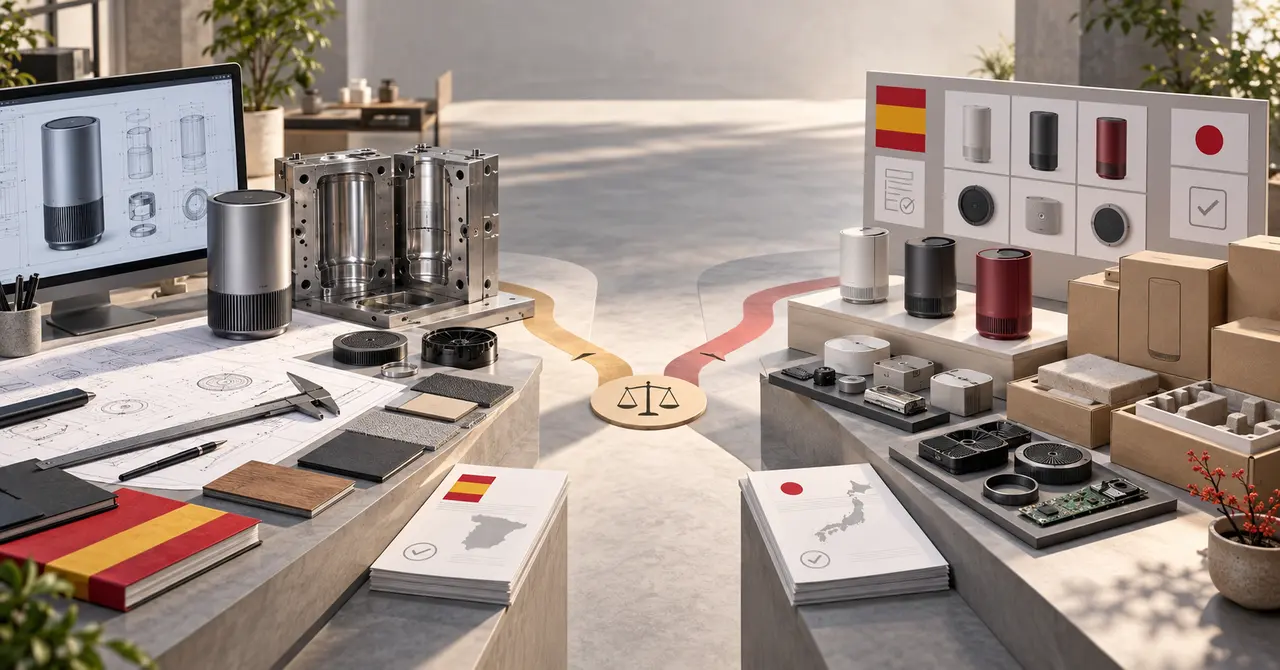
OEM and ODM are two ways of dividing product development and manufacturing between you and the factory. The right one depends on how different your product needs to be, how fast you need a validated product and how much control you can manage over specs, tooling, IP and quality.
In short
- Choose ODM when speed and an existing product base matter more than deep ownership.
- Choose OEM when your own spec, design, tooling or differentiation is central to the business.
- Treat sample approval, IP, quality, packaging and change control as part of the decision.
OEM and ODM in practice
| Model | You typically control | The supplier typically brings | Main risk |
|---|---|---|---|
| OEM | Design, specification, brand requirements, often tooling and artwork | Manufacturing capability, materials, process, production | Development cost, IP control, consistency |
| ODM | Positioning, chosen modifications, branding, packaging, acceptance criteria | Existing design, development base, manufacturing process | Limited differentiation, shared design, change limits |
The label alone doesn't tell you which supplier to pick. Ask who owns which design files, molds, materials, test results, artwork and production know-how, and how future changes are handled.
How to decide
- ODM if you want to validate demand quickly, can accept a more standard base product and have a clear packaging and brand brief.
- OEM if the specification, function, shape or IP is a core reason people pick your brand.
- Staged if you want to test the concept first and invest in customization once demand and quality are proven.
A Spanish brand may care most about retail-ready packaging and a path into local distribution. A Japanese brand may focus on precise specs, consistent batches and disciplined supplier communication. Not different models, but different requirements.
Map the work before choosing the label
List what is needed to reach an approved production version: concept, industrial design, engineering, components, samples, packaging, testing and production documents. Give each an owner. Ask the supplier what already exists and what must be developed: an "ODM" proposal may still need big changes for your market, and an "OEM" project may still depend on supplier engineering. The real split of work belongs in the brief.
Compare the whole project, not the unit price
Request separate quotes for development, samples, tooling, testing, packaging setup and recurring production, and find out which costs you owe if the project stops after a sample. Check whether the unit price assumes a certain quantity, material, component source or forecast commitment. Compare the first run and the replenishment separately: a lower development bill can mean higher recurring cost or less flexibility, and a highly customized product may need new validation whenever a component changes.
Don't forget your own time. Someone has to approve specs, answer sample comments, coordinate destination requirements and authorize changes. Outsourcing manufacturing doesn't remove the need for a product owner.
Ownership and access
List the assets: drawings, digital files, molds, fixtures, firmware if relevant, packaging artwork, samples and technical records. For each, ask who owns it, who may use it, where it is kept and what happens if you change manufacturers. Paying a tooling invoice doesn't automatically answer every ownership question. Have the actual agreements reviewed by qualified advisers: this checklist doesn't determine IP rights, it helps you ask the right questions. If exclusivity matters, define the product, market, period and permitted variations, and don't rely on a sales line that a design is "yours".
Release in gates
Use separate approvals for the development brief, sample, production specification, packaging and first production release, recording unresolved items and who can accept them. After the first run, compare production evidence and receiving feedback with the approved baseline and record improvements as controlled changes. Either way, your lasting asset is a repeatable product and approval record.
FAQ
Is ODM always cheaper than OEM?
Not necessarily. ODM may reduce development work, but total cost depends on customization, tooling, MOQ, packaging, testing, IP and volume.
Which is better for a new brand in Spain or Japan?
It depends on your differentiation, resources, timeline and quality needs. A staged path lowers early commitment and keeps customization open.
Who owns an OEM product design?
It depends on the contracts, who contributed the design, the tooling and local law. Get legal advice and define ownership and permitted use before production.
Keep reading
 Sourcing & suppliers
How to find a reliable supplier in China (and avoid the usual traps)
A practical checklist to shortlist, verify and test Chinese suppliers before you place your first real order.
Read article Sourcing & suppliers
How to negotiate MOQ in China and build a first order that works
A supplier's minimum order is not a fixed rule. Learn what sets it, what you can change, and how to compare a pilot order with the full MOQ.
Read article Sourcing & suppliers
Private label in China: how to launch your brand without losing control
Putting your logo on a product is the easy part. Define the brief, protect your designs and approve the first batch with evidence.
Read article