
When is it time to switch suppliers?
There is no perfect supplier. The question is whether yours is helping you grow or slowing you down. The signs, the hidden costs and how to evaluate them.
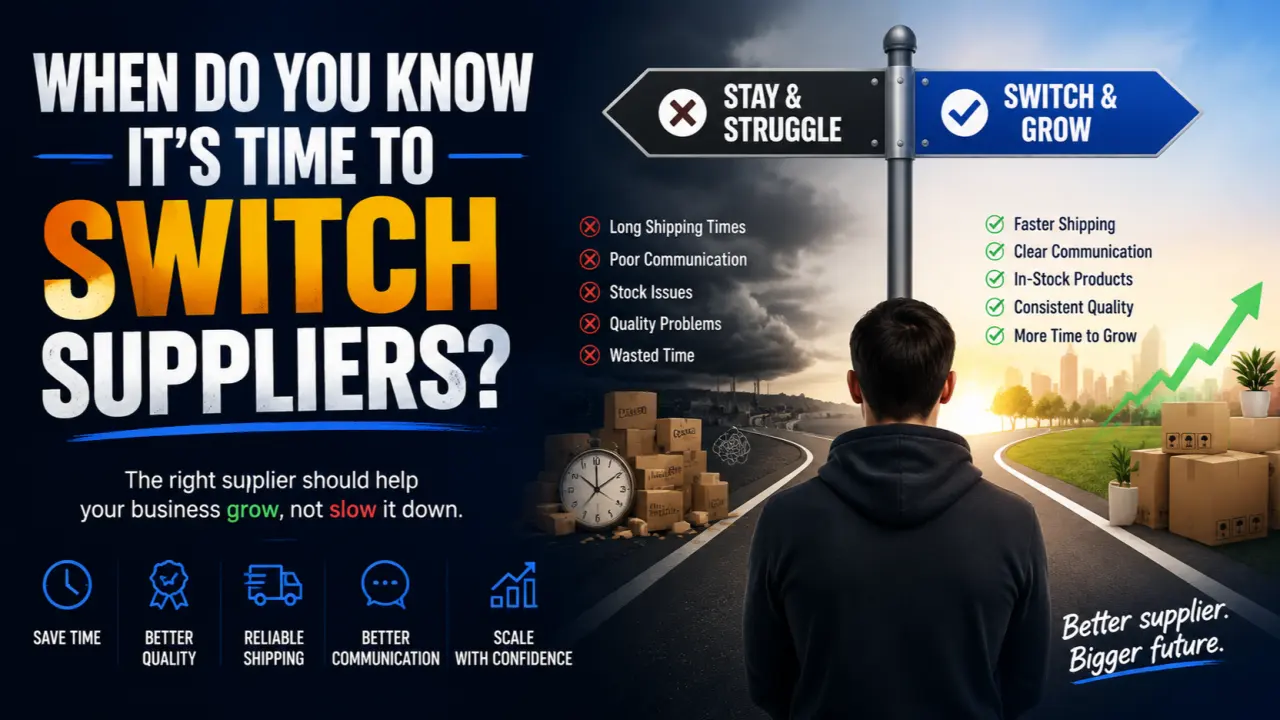
One of the hardest decisions for ecommerce operators is knowing when to leave a supplier. Most people don't switch because the supplier is "bad". They switch because, at some point, the supplier becomes a growth limitation.
There is no perfect supplier
No single supplier makes everyone happy. Different businesses need different things: a new dropshipper needs speed and flexibility, a growing brand needs consistency and quality control, a high-volume seller needs reliability and scalability. The "best supplier" depends on your product category, order volume, customer expectations, shipping requirements and business stage. Some people prefer platforms like Zendrop, CJ or HyperSKU, and others choose direct manufacturers or sourcing partners.
So the real question isn't "who is the best supplier?" It's: "Is my supplier helping me grow, or slowing me down?"
The warning signs appear slowly
At first you accept the small problems: shipping is a little slow, customer service is a little messy, stock updates aren't always accurate. Eventually those small problems become your daily workload. The turning point for many operators is realizing they spend more time fixing supplier problems than growing their business.
The hidden cost of a bad supplier
A supplier issue is rarely just a supplier issue. One delayed order creates more customer emails, more complaints, more refunds, lower reviews and less time for marketing. A seller once told us: "I had around 15 orders stuck in processing for one week. I spent three days only replying to angry customers." The problem didn't just affect fulfillment. It stopped the business from growing.
The biggest sign: your supplier becomes your full-time job
Many people start in ecommerce for freedom. Instead they end up checking order status every day, following up on tracking numbers, asking about inventory, solving quality complaints and chasing suppliers for updates. At some point the question becomes: am I running an ecommerce business, or managing supplier problems?
A better way to evaluate your supplier
Before switching, ask yourself:
- Communication. Can you get answers quickly, or do you need to follow up repeatedly?
- Reliability. Are products consistently available, or do you find stock issues after the orders arrive?
- Quality control. Does the supplier protect your customer experience, or do you discover problems after delivery?
- Scalability. Can this supplier support your next 10x growth, or will every increase in sales create more problems?
The right supplier gives you time back
The biggest benefit of a good supplier isn't only cheaper products. It's removing operational stress. A strong sourcing partner should help you find reliable suppliers, monitor product quality, track orders clearly, improve fulfillment speed and reduce daily headaches, so your time goes to marketing, product research, customer growth and building your brand. Not chasing suppliers.
Final thought
Switching suppliers isn't about finding someone perfect. It's about finding a partner who matches your current stage. The right supplier shouldn't become another problem to manage. They should become part of your growth system.
The best operators don't wait until everything breaks. They switch when they realize: "My supplier is costing me more growth than they are creating."
What was your biggest reason for changing suppliers: shipping delays, communication issues, quality problems or lack of scalability? We'd love to hear your experience.
Keep reading
 Sourcing & suppliers
How to find a reliable supplier in China (and avoid the usual traps)
A practical checklist to shortlist, verify and test Chinese suppliers before you place your first real order.
Read article Sourcing & suppliers
How to negotiate MOQ in China and build a first order that works
A supplier's minimum order is not a fixed rule. Learn what sets it, what you can change, and how to compare a pilot order with the full MOQ.
Read article Sourcing & suppliers
Private label in China: how to launch your brand without losing control
Putting your logo on a product is the easy part. Define the brief, protect your designs and approve the first batch with evidence.
Read article