
When dropshipping turns into a supply chain operation
Repeat demand, more SKUs and quality complaints mean you need more than a product feed. The signals, the stages and what to control first.
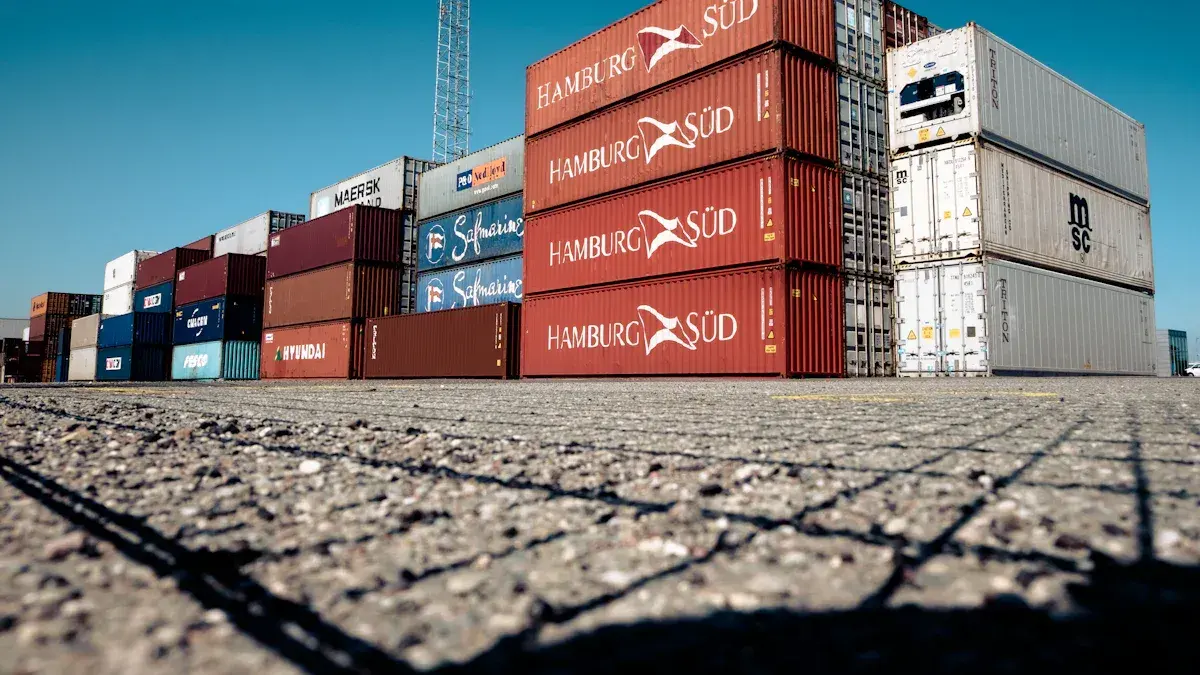
Dropshipping starts as a low-inventory way to sell. But once you have repeat customers, several SKUs, quality expectations, delivery promises or stock risk, you're running a supply chain. And a supply chain needs more than a product feed and a shipping label.
In short
- The tipping point is operational: repeat demand makes you responsible for quality, delivery, stock and brand experience.
- Use one-piece fulfillment to learn, then add specifications, QC, packaging, stock and replenishment controls.
- A sourcing and fulfillment partner should support a clear operating system, not just forward orders.
Signs you need stronger controls
- One SKU comes from several suppliers with different specs.
- Complaints show recurring defects, missing parts or inconsistent packaging.
- You promise delivery dates before stock, production or route capacity is confirmed.
- Growth causes stockouts, excess stock or cash tied up in uncertain products.
- You need custom packaging, private label or a repeatable quality standard.
This doesn't mean abandoning low-inventory fulfillment. It means making sourcing, stock and release decisions on purpose.
Build it in stages
| Stage | Minimum control | Next decision |
|---|---|---|
| Product test | Supplier shortlist, sample, basic spec and route assumption | Is the demand and quality evidence strong enough to continue? |
| Repeat orders | Approved spec, supplier record, inspection checkpoint, exception log | Hold stock or replenish in planned batches? |
| Brand building | Packaging, labeling, QC standard, stock plan, consistent fulfillment | Which warehouse and partner protect the customer promise? |
| Scale | Supplier portfolio, KPI review, forecast, safety stock, backup route | How do you split sourcing and fulfillment across markets? |
In every stage, ask five questions: what is approved, what is in stock, what has passed QC, what route is committed and who owns the exception. Procurement, operations, finance and customer service should all see the answers. For Spain you may need to decide when China stock, consolidated freight and local inventory should work together; for Japan, tighter specification and communication as volume and variety grow.
Find the promise you can no longer keep
Start with the failures your team already sees: unavailable variants, inconsistent products, missing tracking, repeated packing errors, uncertain delivery dates. Link each one to a promise you made. The goal is to find the operating problem worth investing in, not to move everything into stock.
Treat products individually. A stable, frequently reordered SKU needs a different setup from an experiment with unpredictable demand. Separate proven, seasonal, new-test and problem products, and note which supplier and route serves each.
A reliable SKU and order record
Map each sales SKU to the supplier's product code, variant, approved image, spec revision and packing configuration. Test variants that look alike. Agree how substitutions are approved and how discontinued items leave the process.
Give orders clear states (received, validated, awaiting stock, released, packed, handed to carrier, exception) and define the event that moves an order between them. A label being created doesn't mean the carrier has the parcel. Assign someone to review orders that stop progressing, with the reason, owner and next step.
Decide on stock using your own data
For an established SKU, compare supplier-direct fulfillment with holding a limited replenishment quantity. Include expected demand, replenishment uncertainty, storage and handling, cash tied up, obsolescence and the cost of missed orders. A starting formula: expected demand during replenishment + a buffer for your service level − usable stock − confirmed incoming. It's an internal aid, not a universal recommendation.
And don't count all incoming stock as available: separate accepted stock from goods awaiting inspection, damaged, reserved and unconfirmed supplier promises.
Add controls in an order your team can maintain
First stabilize product identity and supplier communication. Then add receiving and quality controls for the products you hold. Connect order release, picking, packing and carrier handoff to the same records. Finally use returns and exceptions to improve supplier and packaging decisions.
Pilot with a limited product group and compare order accuracy, stock availability, dispatch evidence, exception workload and cost against your baseline. Expand when the process works without one person repairing every mismatch.
FAQ
Can established brands use dropshipping?
Yes, for testing products or low-inventory fulfillment. The management needs grow with demand, SKU count and brand responsibility.
When should a brand hold inventory?
When demand is repeatable, delivery promises matter, replenishment lead time is significant or holding stock improves service and unit economics. Use a forecast and a cash-flow model.
What is the first process to improve?
The approved spec, supplier record, QC checkpoint, stock status and shipment exceptions. They remove many recurring issues.
Keep reading
 Ecommerce & dropshipping
Dropshipping in 2026: what actually moves the needle
No course, no guru talk. What matters when building a dropshipping business today: product, economics, your page, creatives and how to scale.
Read article Ecommerce & dropshipping
I spent $3K on Meta and people still aren't buying
A solo founder's story: great CTR, add-to-carts and zero purchases. Three suspects for where the funnel breaks, and what to test next.
Read article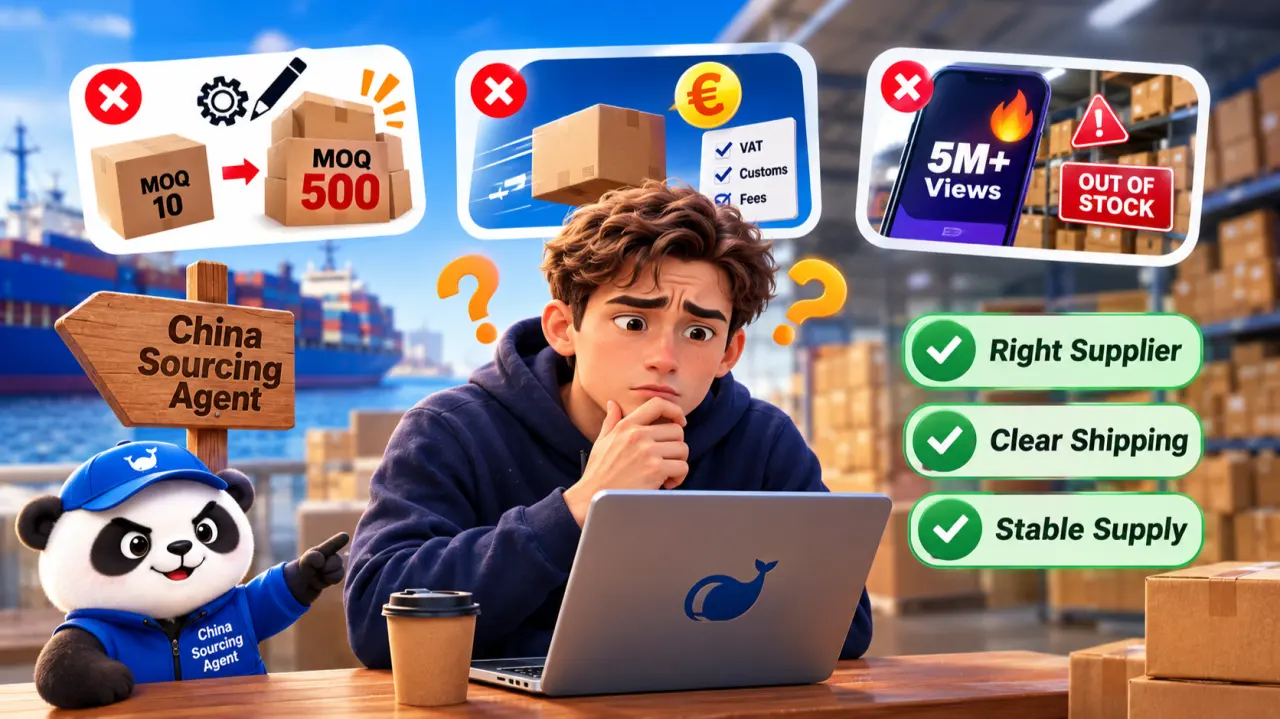 Ecommerce & dropshipping
3 mistakes new dropshippers keep making, from a sourcing agent in China
MOQ that jumps when you customize, the cheapest shipping that costs the most, and a viral product with a supplier that can't scale.
Read article