
Demand forecasting for importers: turn your sales plan into a China reorder
Forecast by SKU and market, add production, QC and freight lead times, and learn how to calculate how much to reorder.
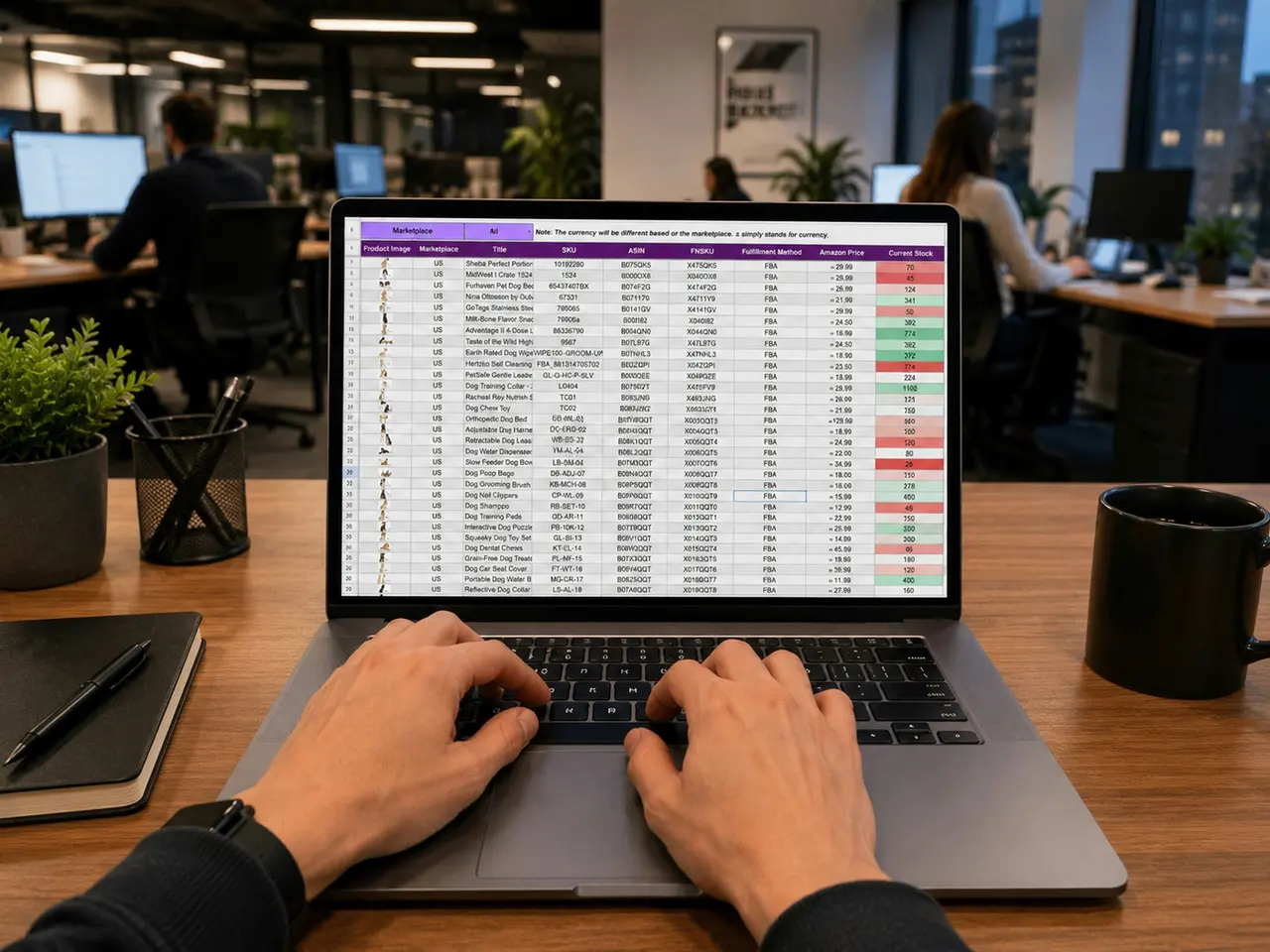
For an importer, a forecast is only useful if it ends in a purchase decision: how much to order, when, and how much cash and risk you can carry. The sales plan has to meet production time, inspection, freight and warehouse capacity.
In short
- Forecast by SKU, market and replenishment cycle, not one total sales number.
- Include production, QC, freight, customs and warehouse lead times in the reorder decision.
- Review forecast errors and stockout causes before changing supplier quantities.
Three questions a forecast must answer
How much might sell? When must the stock be available? How much uncertainty can you absorb? Separate baseline demand, planned promotions, seasonal effects and new-product assumptions, then compare the result with the supplier's MOQ and capacity, inspection timing, route and warehouse capacity.
Build it from usable records
Start with sales by SKU, market and period. Keep returns, cancellations, unusual promotions and days without stock visible: sales during a stockout understate real demand, and a one-off campaign overstates repeat demand. Also separate firm commitments from expected sales. A distributor's confirmed purchase order and your own promotional target are not the same evidence. Give each assumption an owner and a review date, so when the order quantity moves, someone can explain what changed.
Your inventory position
Count accepted stock, allocations, confirmed incoming quantities and open commitments. Don't count a supplier's informal promise as inspected incoming stock, and note when each lot becomes usable. One total can hide stock that is physically there but cannot be released.
A simple planning formula: expected demand during the replenishment period + buffer − usable stock − confirmed arrivals. Make sure committed demand isn't subtracted twice.
An example
An established SKU sells 100 units a week and replenishment takes six weeks. You choose a 150-unit buffer, have 300 usable units and 100 confirmed arrivals.
600 + 150 − 300 − 100 = 350 units
If the supplier's MOQ is 500, the extra 150 is a commercial decision: compare a bigger order, a changed assortment or another supply option using real costs. If the confirmed arrival slips outside the period, remove it and review the shortage. (Invented figures, not a service target.)
Review worksheet
- Demand: baseline, commitments, promotion uplift and why each is included.
- Timing: production, inspection, consolidation, freight, destination processing, receiving, using your own evidence.
- Uncertainty: low, base and high scenarios, the decision each one triggers and who reviews it.
- Constraints: MOQ, cash, storage space, packaging commitments and the latest acceptable arrival date.
- Decision: approved quantity, reason, review date and the conditions that would change or stop the order.
Measure the error honestly
Compare actual demand with the forecast made before purchasing, not a revised one made after you saw sales. Look at the size and the direction of the error: constantly over-forecasting ties up cash even if the average looks fine. Keep low-volume items apart, because percentages exaggerate small differences. Review Spain and Japan separately when their customers, campaigns or routes differ.
Share the plan with finance: when cash goes out, when payments fall due and when the stock becomes sellable. A forecast can be reasonable and still exceed your budget. If you defer part of the quantity, write down what would authorize it later, so sales sees the exposure instead of finding out during a stockout.
FAQ
Can a forecast remove stockout risk?
No. It improves planning, but demand, production, carrier and customs uncertainty remain. Use scenarios and a documented exception plan.
Should sales or purchasing own the forecast?
Both. Sales brings the demand information, while purchasing and operations turn it into lead time, MOQ, stock and cash decisions.
What is the most important forecast metric?
Look at forecast error together with stockout rate, excess stock, lead-time variance and service level. One accuracy percentage is not enough.
Keep reading
 Operations & inventory
Short-video sales spikes: how to keep your supply chain ahead of demand
A video can sell out your stock in a weekend. Here is how to share inventory across channels and set limits before a campaign goes live.
Read article Operations & inventory
TikTok Shop: set your stock and packing limits before you promote
TikTok Shop can multiply orders overnight. Use a simple go/no-go checklist so stock, quality and packing keep up with the campaign.
Read article Operations & inventory
Shopify fulfillment from China: what has to happen behind each order
Your store promises a delivery date. This is the order flow, daily checks and stock rules that let your China fulfillment keep that promise.
Read article