During production inspection: what it is and why it matters
Checking quality while your order is still being made, typically at 10–80% completion, catches defects early, when they're still cheap to fix.
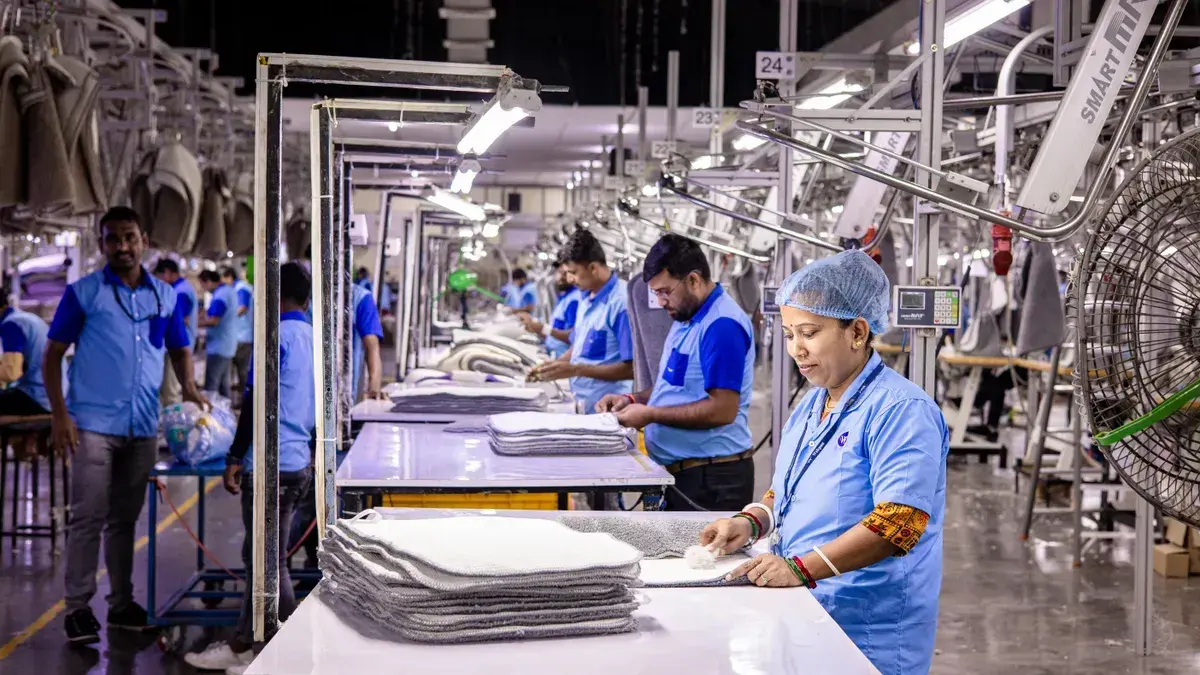
A during production inspection (DPI) checks your product's quality while it's still being made. It usually happens when a good share of the order, commonly somewhere between 10% and 80%, is complete. You don't wait until everything is finished. You look at the process, the materials and the work done so far, and fix problems while there is still time.
In short
- DPI finds problems early, which saves time and money.
- Schedule it when roughly 10–80% of the order is made.
- Use clear checklists and independent inspectors.
- Check your suppliers regularly to keep standards high and returns low.
When to do it
Inspection providers typically place it anywhere from about 10–15% up to 60–80% of completion, with 15–40% a common choice. The right point depends on the product and the production process.
Your goals:
- Watch the production process and keep it on track.
- Find defects early, before you waste more money.
- Fix problems right away.
- Check that products match all rules and standards.
You'll classify the defects you find:
| Category | Description |
|---|---|
| Minor | Small issues that don't affect function but may affect looks, such as tiny scratches or a crooked logo |
| Major | Problems that make the product hard to use or unsafe, like broken pieces or wrong sizes |
| Critical | Very serious problems that could hurt someone or break rules, such as electrical hazards or contamination |
Why it matters
You don't have to wait until the end to find mistakes. If you find them early you can fix them before they spoil the whole order:
- Defects don't spread through the batch.
- You can still fix things while there's time.
- You waste less, do less rework and pay for fewer returns.
- You can protect your schedule by spotting delays and risks early.
DPI also helps you meet the rules of the countries you sell in, and independent inspection teams can check your process against them. That builds trust with customers and partners.
The DPI process
- Set inspection rules using drawings and what your customers need.
- Check raw materials before production starts.
- Inspect products at different times while they're made.
- Do a final check that products match all requirements.
- Write down what you find and produce a report.
Inspectors use various tools: calipers and micrometers for dimensions, gauges to check parts fit, visual inspection for surface problems, hardness testers, leak detectors and pressure gauges, and for more advanced products spectrometers, thermal imaging, ultrasonic and non-destructive testing, and process-control software.
How we help
We build inspection into the buying and shipping process: you send us product links or details, we talk to the suppliers, check products with photos and videos and give you feedback fast so you can decide quickly. We also check suppliers and packaging, and we can arrange special packaging to keep products safe.
Best practices
- Make clear checklists for quality and compliance, covering every product detail.
- Use third-party inspectors for fair reports.
- Share findings with suppliers so they can fix problems, and set up ways to give and receive feedback.
- Combine your own checks with outside inspections.
- Audit suppliers regularly to see whether they fix issues and keep quality.
Doing these things improves your ability to write clear rules, helps you communicate with the people who make your goods and shows whether suppliers have good systems.
Common challenges
- Cost can be a barrier for small businesses, so you need a clear reason for the spend.
- Production changes require flexibility.
- If test conditions differ, results may not be comparable.
- Changing how your team works can be hard.
A flexible approach helps: a full check for big or new orders, sample checks for repeat orders and a dedicated contact who handles communication. Pre-shipment inspection is also useful to catch issues before products leave.
Inspection pays off by preventing costly rework, making your supply chain more efficient and protecting your brand's reputation.
FAQ
What is the main goal of a during production inspection?
To find problems early, so you can fix issues before the whole order is finished. You save money and keep customers happy.
When should I schedule it?
When roughly 10–80% of your order is complete, so you can catch mistakes before they affect the whole batch.
How do you handle it?
We check your products during production with photos, videos and inspectors, and give fast feedback and advice.
Does it work for any product?
For many products: electronics, clothing, toys and more. The checklist is adapted to each one.
Keep reading
 Quality control
Product samples from China: from brief to approval
A sample is the gate before mass production. Define what it must prove, record every deviation and keep the approved version as your reference.
Read article Quality control
What to do after a failed pre-shipment inspection
A failed inspection is a decision point. Hold the goods, classify the defects, get a real corrective action and release only with evidence.
Read article Quality control
How to write a product specification sheet for Chinese manufacturers
A spec sheet turns an idea into measurable requirements for quoting, sampling, production and inspection. What to include and how to control revisions.
Read article